

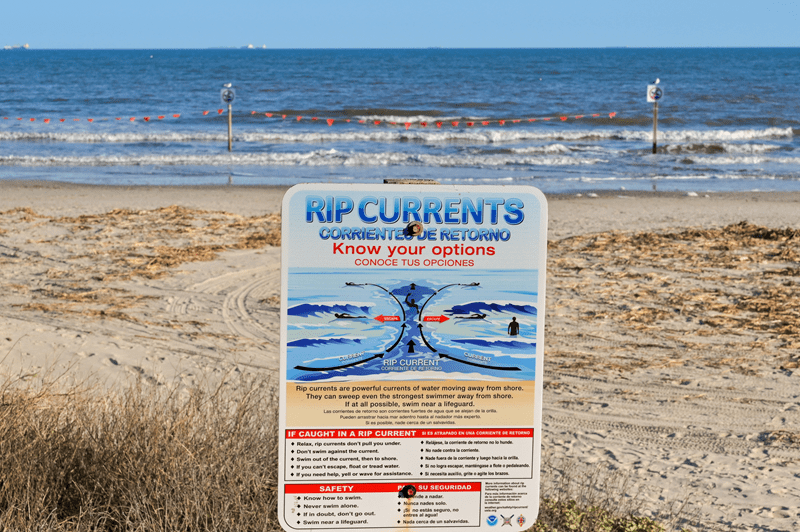
A day at the beach is generally associated with fun in the sun and playing with the sand. However, alongside the beauty of the coast is a powerful natural hazard that is often misunderstood by most people - rip currents. Knowledge of Rip Current Survival is not only informative but also life-saving. These narrow, swift water channels can be found at almost any beach with breaking waves.
This manual provides information on how rip currents arise, how to detect them, and easy steps to practice escaping rip currents safely.
Before learning about Rip Current survival, we must first understand rip currents. Rip currents are basically strong and fast waterways that move from the shore. This usually happens when wave after wave keeps bringing water to the shore, and the water that gets there has to flow back to the ocean, but only through a small area.
This last flow is what becomes so strong that it can carry people who happen to be in the water far away. Understanding this movement is the first step in mastering Rip Current Survival.
By mastering this skill, a person’s risk is lowered considerably. To enhance your safety in the event of a rip current, you may check for such indicators as:
You can easily see dangerous currents if you climb on a hill, dune, or lifeguard tower. If you are still confused, take the opinion of a lifeguard before entering the water. Most of the time, lifeguards are quick to spot marine dangers.
The major reason why rip currents are so dangerous is that they are unexpected. The common behavior of a person caught in this situation is panic, and the action of fighting rips with full force. However, the ocean is always stronger. By panicking, the victim soon runs out of energy, and this leads to more danger.
Another thing that makes rip currents dangerous is that they can happen on days when the weather is good. Calm water is not always an indicator of safety. This is the reason why learning how to survive rip tides is so important, especially for beach families, solo travelers, and beach sports enthusiasts.
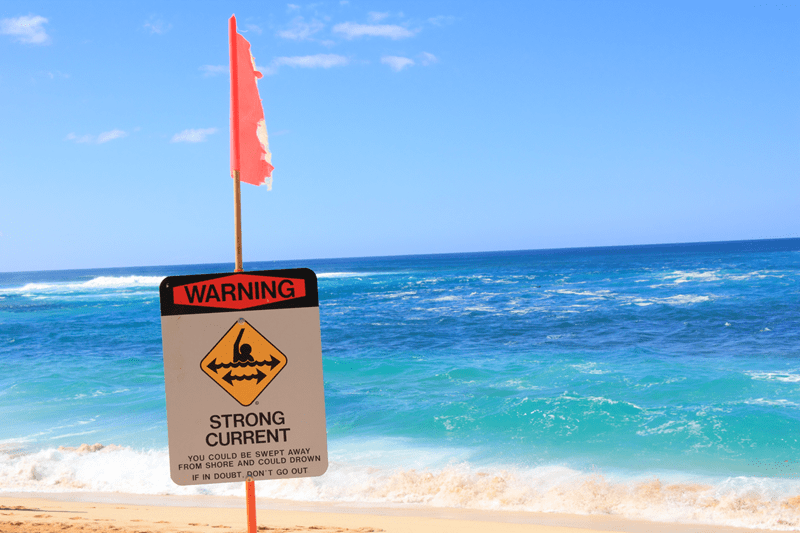
The primary factor contributing to the success of Rip Current Survival is knowing what to do in such instances. In case you find yourself in a situation where you are being pulled away from the shore, try to recall the following:
Following these directives will raise your chances of being able to escape from a rip current without risking your life by overexerting yourself.
Beach safety is about the right choices that you make, even before you get into the water. Every person who visits a beach has to follow certain rules that will not only ensure his/her safety but also the safety of others. These rules, which form the basis of ocean safety, will also enable you to be more aware of the possible rip current dangers around you:
The greater part of mishaps takes place when people overestimate the situation. Even strong swimmers should keep these tips in mind while staying safe in surf environments.
Some swimmers are puzzled by how moving sideways can help. A rip current is similar to a moving conveyor belt. If you try to run backward on a conveyor belt, you won’t make any progress. However, if you step off the side, you get out very quickly.
When you swim parallel to the beach, you are able to get out of the empty rip current, which allows you to get to the safe water. After that, you can swim back to shore at an angle. This basic method is among the most powerful components of the set of skills to survive rip tides.
Children are in more danger than adults because they usually panic swiftly, and they also get tired very quickly. Parents should definitely educate their children on simple rules:
Such abilities not only strengthen their trust in themselves but also help them rationalize that even if there are elements like ocean current dangers, they should not be afraid.
When waves are bigger and rougher, people need to be more careful about rip current safety. Because of the large waves, rip currents become frequent and stronger. Persons who are surfing or swimming should:
High surf may be thrilling; however, it also comes with more dangers. One can protect oneself from the dangers of high surf by being cautious and respectful towards nature.
If you see someone struggling, refrain from helping them unless you have received proper training. Instead:
Usually, people trying to rescue victims without professional training end up needing more rescue themselves. So, be safe first, but still offer assistance.
The ocean can be a perfect place to unwind and discover new things. However, it requires that you respect it and stay aware. By having the basic knowledge of how to survive a rip current, you will feel comfortable being at the beach when the conditions are not ideal.
If you have the right habits, are attentive and well prepared, there will be no obstacles to enjoying every beach trip in a safe way, keeping you away from unnecessary risks.
Before going to a beach, find out if rip currents are dangerous there by checking warnings from local authorities. Confirm these details by asking lifeguards. Additionally, look for rips such as darker water channels or areas with no breaking waves between two that are coming.
No. Rip Currents pull the victim offshore, not downwards. The bigger problem is Panic, not being pulled underwater.
The safest solution is to not lose your cool, keep yourself floating, and swim along the shore in a direction where you are getting out of the current.
Yes, Kids learning simple skills like floating, being aware of the shore, and close contact with adults will be more secure near strong surf.
This content was created by AI