

For many Americans, the open ocean calls to them as the greatest adventure, sun on your face, salt in the air, and marine animals surfacing just feet away. Throughout the United States, wildlife tours offer unparalleled opportunities to observe dolphins, whales, sea lions, and other marine animals in their natural environments. These guided experiences combine excitement, education, and conservation awareness to form one of the top choices for families, solo travelers, and nature enthusiasts alike.
Accordingly, the growth of responsible wildlife tours has also transformed the relationship between tourists and marine ecosystems. Modern marine wildlife watching experiences represent habitat protection, appropriate conduct around animals, and the importance of coastal ecosystem conservation, rather than pure tourism. From the deep blue waters of the Pacific to the warmer seas of the Gulf Coast, the U.S. is home to some remarkable coastal animal encounters that put you face-to-face with some of the ocean's most iconic species.
What follows is the most comprehensive guide concerning the best places to visit, what you might expect from the water itself, whale watching trips, and how to choose the best sea life excursions during your next adventure.
Structuring these adventures with Wildlife Tours has emerged as a credible and safe way to encounter dolphins, whales, sea lions, and many other marine animals. Trained guides help travelers understand more about the behavioral patterns of these animals, migration patterns, and even conservation challenges faced, rendering marine wildlife watching more meaningful and responsible.
From Atlantic to Pacific, U.S. waters are home to many species of animals that migrate there in different seasons of the year or reside along coasts year-round. That makes whale watching trips, dolphin tours, and coastal animal encounters possible in virtually every region of the country with ocean access. Whether your preference is for speedy, adventurous Zodiac boats or large, comfortable catamarans, there is a type for every kind of traveler.
Other positives include the fact that organized tours of sea life focus on keeping a respectful distance from them and viewing them without causing disruptions. Operators aware of ethics follow all federal guidelines, most importantly, the Marine Mammal Protection Act, so that animals remain safe and undisturbed. This, in turn, yields better sightings and healthier oceans.
Here are a few of them.
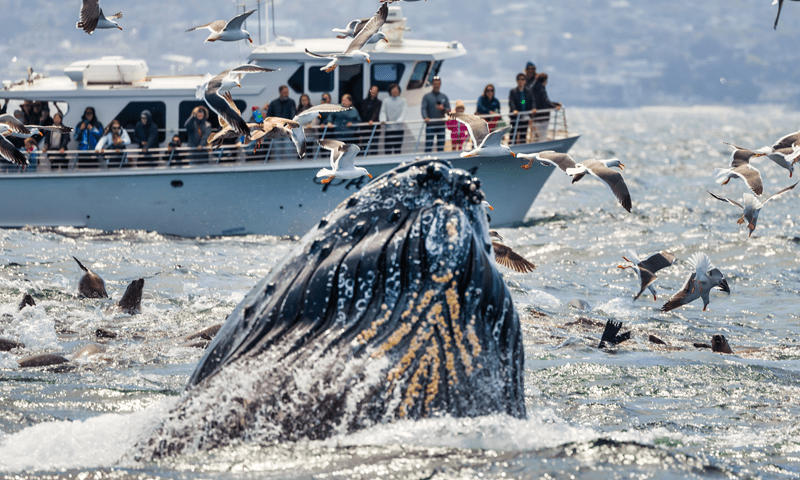
Generally speaking, Monterey Bay is considered one of the best places for whale-watching trips in the world. Its deep underwater canyon concentrates nutrients, which attract humpback whales, blue whales, gray whales, orcas, dolphins, and sea lions into the bay throughout the year. The biodiversity of the bay makes marine wildlife watching vibrant and reliable here.
Travelers may also be treated to dramatic feeding events, surface breaches, and large multi-species gatherings. Most Wildlife Tours from Monterey include educational commentary about conservation, marine sanctuaries, and ongoing research.
The quiet waters and exceptional marine life go hand in hand with the Pacific Northwest. Whale-watching excursions here commonly see orcas, minke whales, humpbacks, and porpoises. The surrounding islands are home to thousands of sea lions, allowing for unforgettable coastal animal encounters.
Many of the sea life tours in the area are in conjunction with scientists, so travelers may see tracking devices, listen to whale acoustics, or learn about challenges local orca populations face.
Cape Cod is among the best destinations along the East Coast for summer whale-watching trips. During the warmer months, the Stellwagen Bank National Marine Sanctuary brings in humpbacks, fin whales, and pilot whales. Dolphins and sea lions also make regular appearances.
These wildlife tours in this region promise U.S. travelers relaxation and rich storytelling about marine conservation in the case of a classic New England ocean adventure.
If grandeur is what you're after, Alaska delivers. Glacial landscapes and quiet fjords provide stunning backdrops for marine wildlife watching. Alaska Wildlife Tours travelers often see humpbacks bubble-net feeding, orcas cruising in pods, harbor seals resting on icebergs, and sea lions gathered on rocky shores. These remote waters harbor many of the wildest coastal animal encounters available in the U.S.
Here are a few of them.
From Clearwater and Sarasota to Naples and Destin, the Gulf Coast is chock-full of dolphin tour opportunities. It's bottlenose dolphin heaven, and spotting them is extremely common. To many visitors, they often surf behind boats or leap joyfully from the waves.
Family-friendly nature tours around the region often combine dolphin viewing with stops at barrier islands for perfect daylong adventures.
Year-round, San Diego, Newport Beach, and Dana Point are hotspots for dolphin tours. Warm coastal waters host tens of thousands of common dolphins on extraordinary sea-life excursions where an entire superpod can swim beside the boats.
It is not out of place to spot other marine animals like the sea lions and whales that migrate, which makes Southern California suitable for multi-species marine wildlife watching.
They also have equally great backdrops for Hilton Head Island and Savannah dolphin tours. Their tranquil waterways provide ideal areas where you can see the feeding and interacting habits of the Atlantic bottlenose dolphins. These tours focus on ecology in the area, salt marsh ecosystems, and responsible observation of the dolphins.
While the dolphins and whales tend to steal the show, the sea lion is truly one of the most entertaining marine animals. Social in nature, these playful creatures can easily steal the show on many a Wildlife Tour.
California sea lions famously congregate at San Francisco's famous waterfront piers, but travelers can find wild groups around the Farallon Islands and along the central coastline. Coastal animal encounters with sea lions are especially common during breeding and feeding seasons.
More of a land-based observation point, the Sea Lion Caves near Florence, Oregon nonetheless offer extraordinary marine wildlife watching. This natural cave system is a year-round hangout for Steller sea lions. Many of the sea life excursions in the region combine cave visits with offshore wildlife viewing.
One of the most diverse marine ecosystems in the United States, the Channel Islands harbor enormous groups of sea lions. Guided boat-based Wildlife Tours frequently take the traveler to well-known haul-out areas or spots, where animals will be barking and swimming, resting, and generally interacting.
Most of the sea life cruises in the U.S. last anywhere from two to four hours. Among the standard features, travelers can expect guided narration, safety briefings, and photography opportunities. Depending on the region and season, the following are possible sights:
During the Wildlife Tours, the interpreters interpret animal behavior and migratory routes, including how climate change or human activity can affect oceanic ecosystems. This educational component adds to the awareness of how to enhance the experience of encountering coastal animals.
Offer early morning tours when the water is calmer and the light is better.
Ethical marine wildlife watching benefits both travelers and ecosystems.
Reputable operators maintain safe distances, slow their vessels around wildlife, and avoid separating animal groups. These adventures inspire appreciation, support conservation, and allow you to witness the beauty of marine life in its natural home. If you're looking for a memorable ocean adventure, the U.S. coastline is waiting-with dolphins leaping, whales migrating, and sea lions soaking up the sun just beyond the horizon.
The best time of year depends on the region and the species you want to see. Whale migrations peak from late spring through fall on both coasts, while dolphin tours along the Gulf and Southern California coasts operate year-round. It is usually easy to spot sea lions throughout the year, as long as breeding or pupping seasons occur during the peak months.
Yes. Most wildlife tours are family-friendly and suitable for children. Operators provide life jackets, safety briefings, and stable boats. If you travel with young kids, choose shorter trips or plan calm-water coastal animal encounters for a more comfortable experience.
Responsible wildlife tour operators respect federal regulations that require operators to maintain safe distances from marine animals. Boats may get close enough for great viewing, but never close enough to disturb behavior. Ethical marine wildlife watching puts the well-being of the animals first while still providing great sighting opportunities.
This content was created by AI